Answer
How much extra data a VPN uses#
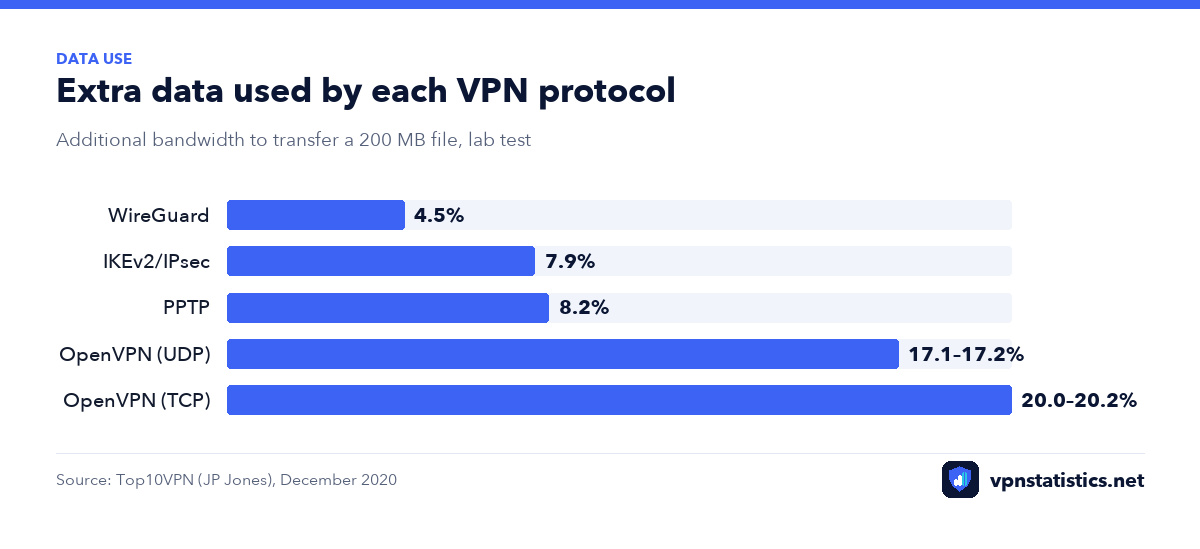
In a 2020 Top10VPN lab test, a VPN used about 4.5% to 20% more data than the same file transfer without one, depending on the protocol. WireGuard added the least (about 4.5%) and OpenVPN over TCP the most (about 20%).[1]
Calculator
What that means for your data plan#
Data used with a VPN, by protocol
| Protocol | Overhead | 1 GB becomes | 10 GB becomes | 50 GB becomes |
|---|---|---|---|---|
| WireGuard | 4.5% | 1.05 GB | 10.5 GB | 52.3 GB |
| IKEv2/IPsec | 7.9% | 1.08 GB | 10.8 GB | 53.9 GB |
| PPTP | 8.2% | 1.08 GB | 10.8 GB | 54.1 GB |
| OpenVPN (UDP) | 17.1–17.2% | 1.17 GB | 11.7 GB | 58.6 GB |
| OpenVPN (TCP) | 20.0–20.2% | 1.20 GB | 12.0 GB | 60.1 GB |
Our calculation from the overhead figures above.
On a 50 GB monthly plan, WireGuard costs you a little over 2 GB extra and OpenVPN over TCP about 10 GB.
Caveats
Why your number may differ#
The test sent one large file between two virtual machines, three times per protocol.[1] Real use varies:
- Small packets cost more. Video calls, gaming and browsing send many small packets, and each one carries the same fixed VPN header, so the overhead share goes up.
- Settings matter. Cipher choice and packet size change the overhead.
- Server location mainly affects speed. It can add a little data on unreliable long-distance connections, where lost packets are re-sent.
FAQ
Questions about VPN data use#
Does a VPN use more data?
Yes, slightly. In a lab file-transfer test, encryption and VPN headers added roughly 4.5% (WireGuard) to 20% (OpenVPN over TCP) to the data used.
Which VPN protocol uses the least data?
WireGuard, at about 4.5% overhead in Top10VPN’s lab test.
References
Sources
Numbered sources match the superscripts on this page. We link to the original publisher wherever one exists. How we check figures · Report an error
- Top10VPN (JP Jones). A study of the additional bandwidth requirements when using VPN protocols (PDF), December 2020. 200 MB file over FTP between two virtual machines, three runs per protocol.